

Introduction
Most investors researching how to start a laundromat business quickly learn the basics: recession-resistant demand, strong cash-on-cash returns, simple and repeatable business model. What they struggle with is the decision that follows — how to enter the coin laundry business. The three most common methods are: buy a turnkey laundromat business, revive a closed down or struggling store, or find the right location to build out a new laundromat from scratch. Each path carries different costs, risks, and long-term implications that go well beyond the sticker price.
Your choice between these three strategies will determine your laundromat business model and have a big impact on everything from initial startup costs and risk profile to laundromat ROI, operational reliability, and long-term growth potential. Most investors focus solely on upfront expenses, missing the strategic implications that will ultimately determine their success as a laundromat owner.
Building a New Laundromat
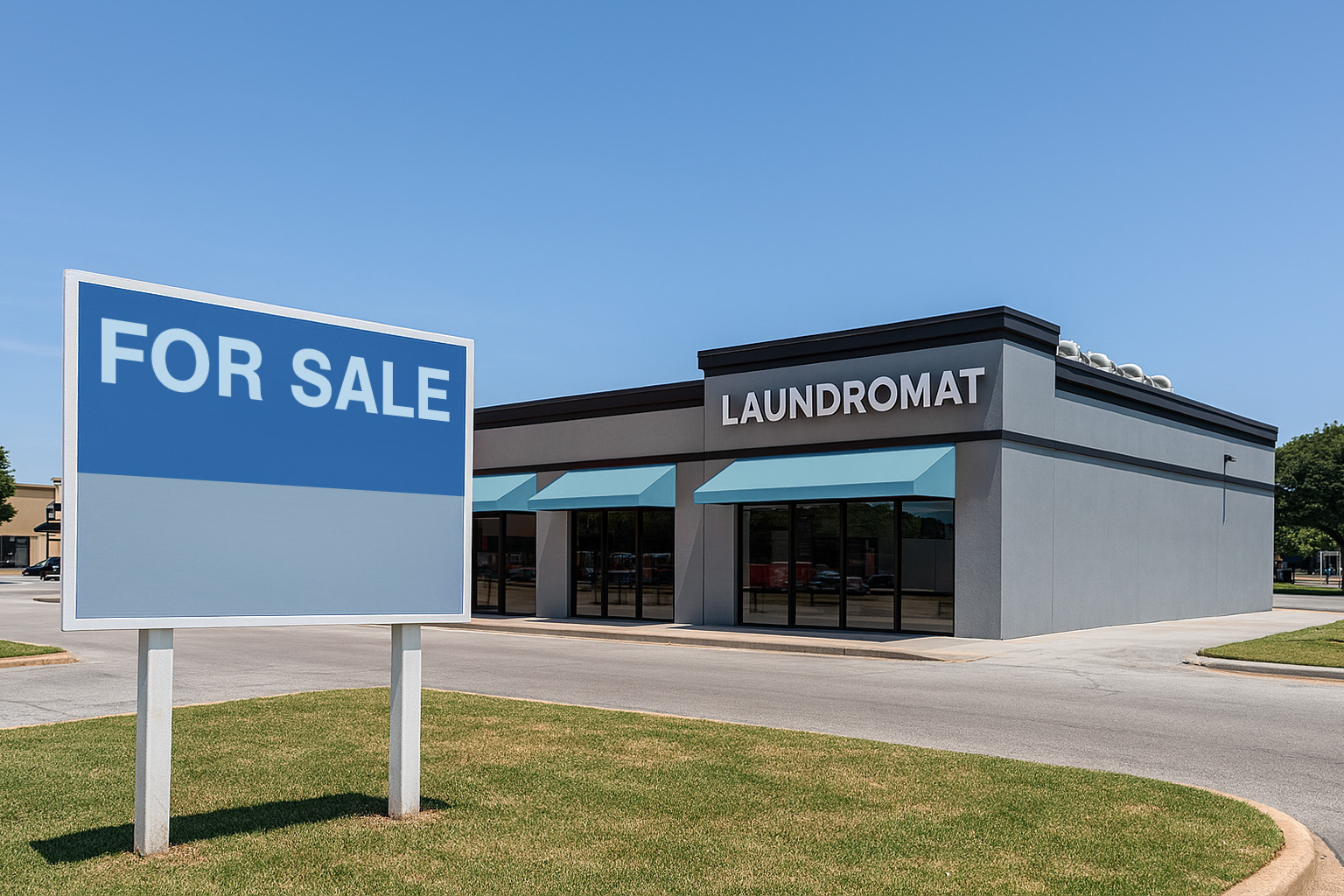
Building a laundromat from scratch involves converting empty shell retail space into a modern, branded store. This approach provides complete control over the geographic location, lease terms, layout, infrastructure, equipment selection, brand and market positioning.

Benefits of Building Out A New Laundromat
- Substantially lower risk from equipment defects and costly repairs or replacement
- Ideal infrastructure in-place for modern equipment or future upgrades
- Access to landlord incentives, tenant improvement dollars, and favorable laundromat lease negotiation leverage
- Secure a prime location in a favorable competitive environment
- Design optimal layout with modern features, amenities & conveniences
- New equipment selection & optimal mix helps improve revenue and cut operating costs
- Complete control over brand identity and target customer profile & demographics
- Superior long-term positioning and competitive edge
Considerations for a Build-Out Strategy
- Longer timeline (typically around 8+ months) from site search to grand opening due to permitting, construction, and inspections
- Path to revenue requires a robust marketing plan and customer acquisition strategy
- Coordination across multiple vendors and contractors, or a trusted partner/advisor who will handle it and support the entire process
- Requires informed initial planning around infrastructure setup, layout & equipment mix
Who It's For
Investors who can commit $150K-$300K+ in liquid capital, have the patience for an 8-12 month timeline before first revenue, and are thinking about this as a 10+ year venture, not a quick flip or a semi-passive side hustle. New builds appeal to investors who want to open a new laundromat in a competitive environment they selected rather than inherited, and who view the longer development timeline as a worthwhile trade-off for favorable location fundamentals and competitive positioning, optimal equipment mix, and full control over the store's brand and long-term growth trajectory.
Cost Reality vs. Perception
Contrary to common belief, new builds often deliver more value per dollar invested than an acquisition of an established laundromat. The difference isn't just avoiding a business acquisition premium, it's that every dollar in a new build goes toward assets you chose, in a location you selected, with infrastructure designed for your specific equipment mix and business model. Zero dollars go toward inheriting someone else's location choice, competitive positioning, or operational limitations.
New build laundromat owners can access several favorable incentives not available to buyers of existing businesses.
- Landlords provide Tenant Improvement (TI) allowances, free rent periods (typically 6-12 months) often provide free rent periods and favorable lease terms to secure qualified tenants for new developments.
- New equipment carries additional tax incentives - longer depreciation schedules help lower costs and improve returns during the early ramp-up period.
- Financing terms also typically favor new installations over used equipment, primarily due to manufacturer warranties.
- New build laundromats have a substantially lower risk of equipment breakdown, especially during the early years.
- Repair downtime and high replacement costs can be detrimental for new laundromat owners and make or break your business.
COMMON CONCERN: "New builds require too much upfront capital which I can’t afford."
Most people think new builds mean writing huge checks upfront, but that's not how it actually works. LRE structures financing to minimize your initial cash investment through several strategies: comprehensive financing that covers both your buildout and equipment in one package, landlord tenant improvement allowances that can cover $20,000-$50,000+ of your costs, free rent periods (typically 6-12 months) that give you time to ramp up revenue, and equipment financing with manufacturer warranties that banks prefer over used equipment loans.
When you add it all up, many of our clients find that a new build-out is actually more cost effective than buying an existing laundromat - especially when you factor in the business premiums plus the cost of upgrading old machines and surprise repair costs that come with existing operations. During your initial consultation with LRE we'll show you exactly how the numbers work for your specific situation.
Buying a Laundromat - Existing Turnkey Business
When you purchase a turnkey laundromat, you're acquiring a fully operational business with an established customer base, functioning laundry equipment, and immediate revenue generation. Buyers can take over day-to-day operations right away, though most stores require equipment upgrades to meet modern standards.

Advantages of Buying a Turnkey Laundromat
- Immediate cash flow from day one
- Infrastructure, permits, and lease agreements already secured
- Established customer base reduces initial marketing requirements
- Potential opportunity to secure seller financing
- Later equipment retooling may provide additional depreciation benefits and tax advantages
Risks of Purchasing an Established Laundromat Business
- Finding the right laundromat deal can take months or years - listing sites capture what hasn't transacted off-market
- Inherited location, market constraints, and competitive positioning
- Risk of unforeseen expenses from infrastructure improvement, especially when upgrading to new machines
- Older machines with long, 45-min cycles physically limit your Turns Per Day (TPD) and cap your revenue
- Equipment replacement often needed sooner than expected
- Some stores lend themselves poorly to maintenance or upgrades
- Inability to renegotiate lease terms or take advantage of initial free rent period & TI dollars
- Depreciation benefits on used equipment are minimal
- Limited ability to modify layout or store format
- Higher acquisition costs due to business premium (typically 25-40% above asset value)
Who It's For
Investors seeking immediate cash flow who are willing to improve existing operations. This approach suits risk-averse investors who prefer proven demand over development uncertainty.
Strategic Considerations
Existing operations lock you into inherited geography and competition. You're accepting the previous owner's location choice, customer base, and competitive environment rather than selecting optimal positioning.
The most common argument for buying an established laundromat is immediate cash flow, and it's a real advantage. But "immediate cash flow" does not equal "strong, stable cash flow". Before paying a premium for an existing operation, look at Turns Per Day by machine type. A store showing $15,000/month in revenue sounds healthy until you realize the washers are averaging 2.5 TPD when that location should support 4+.
A cheap underperforming store is riskier than a top-performing expensive store.
In most cases, the equipment upgrade needed to close that gap (e.g. high-efficiency machines, card payment systems, modern amenities) eliminate the perceived savings of buying existing rather than building new so it's important to factor these costs in early.
Lease inheritance presents another challenge. Current lease may include unfavorable lease terms like high/frequent rent escalations, limited tenant improvement allowances, or operational restrictions that constrain future improvements.
COMMON CONCERN: "I need new commercial laundromat machines, but have no idea how to pick the right ones."
You don't need to become an equipment expert overnight. LRE provides customers with one-on-one guidance and walks you through all the key areas: what types of machines are available and prevalent today, how they differ, ways to save money, features that actually make you more money, and what different types of customers will prefer.
By the end of the process, you'll know exactly which equipment is within your budget, how it compares to that of your competitors, and what mix of machines is best suited for your store. From there, the purchasing and installation process is seamless and perfectly timed with your buildout.
Dark Stores & "Zombiemats" - Renovating, Retooling & Modernizing Closed-Down or Struggling Laundromats
A dark store is a previously operational laundromat that closed down but retains essential infrastructure: plumbing, electrical service, and ventilation systems. These sites often lease at below-market rates, making them attractive for cost-conscious, savvy investors, however without thorough due diligence and sometimes hefty laundromat renovation costs they can quickly turn into a money pit.
A zombiemat (sometimes "zombie mat"), on the other hand, is a laundromat that is still open but barely operational. Zombiemats are characterized by neglected facilities, broken or outdated equipment, deteriorating conditions, and disengaged ownership that has stopped reinvesting in the business. Unlike a dark store, a zombiemat is still generating some revenue and may retain an active customer base, however thin. The acquisition considerations and risks are largely the same: infrastructure of unknown condition, an inherited reputation that will take time to shed, and a retooling investment that often surprises buyers on the upside.

Value of Taking Over a Closed Down Laundromat:
- Lower acquisition costs - little to no business premium
- Essential infrastructure in place with key utilities already installed
- Opportunity to negotiate some tenant improvement (TI) dollars or rent concessions
- Sometimes shorter time to operation than full new buildout
- More control over new equipment selection/mix though still limited by infrastructure and layout
Disadvantages of Buying a “Dark” Laundromat:
- Hidden/unforeseen costs from dated or inadequate infrastructure & equipment
- Risk of taking on a location with poor fundamentals & low customer demand
- Risk of inheriting previous operation's negative reputation, which can put a ceiling on turns per day
- Non-existent or thin customer base - requires a full marketing launch
Who It's For
Experienced, value-seeking, risk tolerant investors and multi-store operators who've spotted a closed or failing laundromat in a market they already know well. The strategic logic is often one of two things: acquire a weak competitor's location to consolidate market share, or capitalize on a landlord who's had vacant space for months and will negotiate aggressively on lease terms. Either way, this path requires renovation experience, a realistic budget for equipment upgrades and infrastructure surprises, and the ability to absorb 4-6 months of buildout before generating revenue.
Thorough Due Diligence is Critical
Understanding why the previous operation failed or is failing becomes essential when taking over a closed or struggling laundromat. Some locations close due to poor fundamentals that new ownership cannot overcome like inadequate parking, weak demographics, competitor oversaturation, etc. Laundromat market analysis since closure is crucial. Demographic shifts, new competition, neighborhood amenities and changing traffic patterns are some factors that can have major impacts on the viability of a location.
Infrastructure conditions can vary significantly. Electrical systems may need updates for modern equipment loads, plumbing might require repairs or be set up in a way that’s difficult/costly to maintain, and HVAC systems could need replacement after vacancy periods.
All prospective investors should take the time to conduct thorough laundromat due diligence and weigh and mitigate risks associated with this type of venture, before taking over a zombiemat or a closed down laundromat.
Comparison of Laundromat Investment Strategies
The True Cost of Buying a Laundromat vs. Building New: A Side-by-Side Comparison
The most common mistake investors make when estimating laundromat startup costs is comparing acquisition prices to buildout estimates and concluding that buying is cheaper. This comparison approach is incomplete and shortsighted. It misses the costs that don't show up in the purchase price and several factors that aren't costs at all, but represent real economic drag on your first few years of operation.
The table below uses approximated figures for a mid-size store (roughly 3,000 sq ft, 30-40 machines) in a typical suburban market. This is merely a directional story to help understand and compare the true cost to open a laundromat under different entry strategies. The figures are provided only for illustrative purposes.
Beyond the numbers: costs that don't show up in a spreadsheet
The table above captures direct costs. There's a second category of economic impact that's harder to quantify but equally real:
- Market inheritance. When you buy an existing laundromat, you inherit the previous owner's location choice. If that location has deteriorating fundamentals, a new competitor set to open nearby, or a lease coming up for renewal with landlord leverage, you own those problems regardless of how good your operations are.
- Existing laundromats may still have a revenue gap. Immediate cash flow from an existing laundromat comes with an asterisk. It's not uncommon for owners to temporarily close the store post-acquisition for machine repairs or quick renovations. In some cases, frequent unexpected repairs may force a partial or full retool with a significantly longer store closure. A 4-6 week closure on a store doing $15,000/month in revenue is $15,000-$22,500 in lost income not factored into the purchase price.
- Reputation inheritance. You can replace machines and repaint walls. You can't immediately replace years of negative Google reviews. A store that earned 3.2 stars under the previous owner doesn't become a 4.8-star store the week you reopen it under new management. That reputation can suppress customer acquisition for 12-24 months and put a ceiling on the store's Turns Per Day, capping profit potential
- Equipment-driven customer erosion. Existing stores with aging machines often have customers who've already adapted their habits, driving past your store to a better one. Winning them back after a retool is harder than attracting new customers who haven't formed that preference yet.
How to Dominate a Market
The fundamental difference between new build vs existing laundromat investments comes down to strategic control versus inherited constraints. The most significant advantage of new builds is the ability to choose where you compete and how rather than inheriting an unknown competitive environment with limited or vague growth potential.
Market Selection vs. Market Inheritance
Existing and dark stores come with inherited geography—you're locked into a specific area with established competitors. New builds allow investors to optimally position their new store based on:
- Underserved neighborhoods with strong population density
- Markets dominated by aging facilities ready for disruption
- Areas with limited competition and high rental populations
- Locations with favorable demographics and proven growth trends